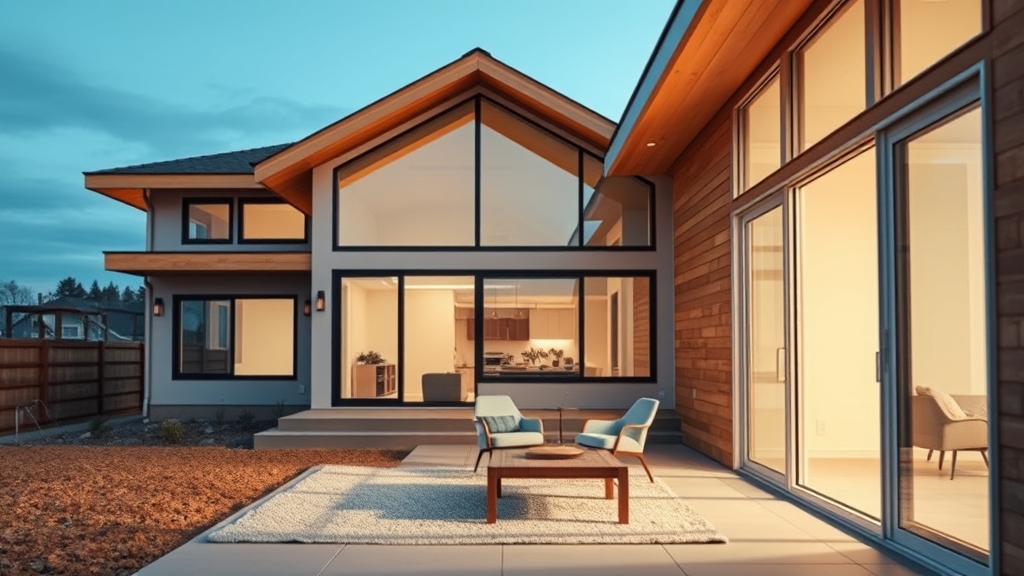
Net-Zero Homes Aren’t a Luxury Product Anymore
Net-zero homes aren’t a luxury product anymore. As of 2024, the cost premium for building these energy-efficient homes has dropped below 8%. That’s a significant shift in the landscape of residential construction. The math has changed, and it’s time to pay attention.
For years, builders faced the perception that net-zero homes—those designed to produce as much energy as they consume—came with a hefty price tag. Many contractors hesitated to invest in net-zero designs, fearing that customers wouldn’t see the value in the higher upfront costs. A 2017 report by the National Association of State Energy Officials (NASEO) highlighted that consumers often viewed energy efficiency as a secondary concern when making purchasing decisions. But now, as construction costs for net-zero homes continue to decrease, this mindset is becoming outdated.
The reduced cost premium is largely due to advancements in technology and increased competition among manufacturers of sustainable building materials. Solar panels, energy-efficient appliances, and insulation technologies have become more affordable and accessible. For instance, KB Home’s Double ZeroHouse integrates solar panels and water conservation systems while costing only about $48,000 more than conventional builds. However, this cost can be offset by projected annual energy savings of $2,698 compared to homes built to older standards. That’s a compelling reason for buyers to consider net-zero options.
Moreover, the recent surge in demand for sustainable housing is driving prices down even further. A 2023 study by McKinsey Global Institute showed that productivity in construction is improving at a faster rate than in many other sectors. This means that builders are able to do more with less, reducing labor costs associated with installing energy-efficient features. The result? Net-zero homes are not just feasible; they’re becoming an attractive option for a broader range of buyers.
Consumers are also starting to recognize the long-term financial benefits of net-zero homes. According to the U.S. Department of Energy, homeowners can save up to $500 annually on energy bills with a well-designed net-zero home. With rising utility costs, those savings add up quickly and help justify any initial investment.
Additionally, financing options for green building are becoming more favorable. Lenders are starting to see net-zero homes as viable investments rather than niche products. As reported by industry stakeholders, mortgage lenders are increasingly willing to offer better terms for energy-efficient homes, making it easier for buyers to consider them as part of their overall investment strategy.
It’s also worth noting that government incentives and tax credits continue to play a role in making net-zero homes more appealing. Programs aimed at promoting renewable energy installations and energy efficiency upgrades can significantly lower the effective cost of building a net-zero home.
As demand grows, builders must adapt their strategies. Those who embrace net-zero construction not only meet consumer preferences but also position themselves ahead of the competition. The U.S. Green Building Council found that 90% of homebuyers consider energy efficiency an important factor when choosing a new home—up from 70% just five years ago. This shift indicates that consumers are no longer viewing energy-efficient homes as mere luxuries; they’re becoming necessities.
Adopting modular construction techniques can also help reduce costs associated with building net-zero homes. Modular construction allows for better quality control and faster assembly times, ultimately leading to lower labor costs and less waste on-site. As shown in various studies, modular buildings can achieve up to 30% savings on energy costs compared to traditional construction methods.
The market is also responding positively to high-performance building certifications like LEED (Leadership in Energy and Environmental Design) or ENERGY STAR®. Homes with these certifications not only appeal to eco-conscious buyers but can also command higher resale values. In fact, homes certified by ENERGY STAR® sold for an average premium of $8,000 compared to non-certified counterparts according to the National Association of Realtors.
This evolving market landscape presents an opportunity for builders who can adapt quickly. Now is the time to educate your clients about the benefits of investing in net-zero homes—not just from an environmental standpoint but also from a financial perspective. Highlighting potential savings on utility bills and available incentives can make all the difference when it comes time for clients to make decisions.
Ultimately, as you plan your next project or pitch your next client, remember: net-zero isn’t just about saving the planet anymore—it’s about saving money too. The construction industry is witnessing a paradigm shift where sustainability is becoming synonymous with affordability. If you’re not considering net-zero designs in your next build, you might be leaving money on the table—and missing out on what could be your competitive edge in an increasingly eco-conscious market.
In summary, net-zero homes are no longer just a luxury item; they’re an accessible option for many buyers today thanks to falling costs and rising demand. Builders who embrace this trend will not only enhance their portfolios but also contribute positively to environmental sustainability while meeting consumer expectations head-on.